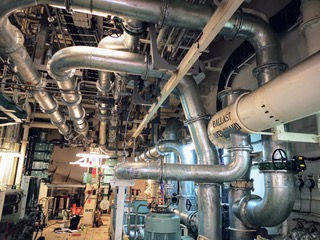
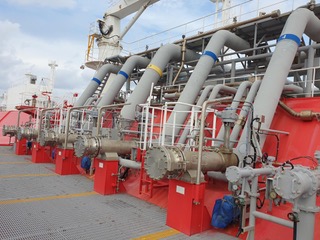
Seawater systems live in one of the harshest services onboard. Corrosion, erosion, vibration, deposits and local flow conditions can gradually reduce margin until a small defect becomes a leak at the worst possible time. No visual checklist replaces thickness measurement or engineering assessment, but recurring warning patterns deserve attention.
Seven warning signs
- Repeated pinhole leaks in the same line or nearby spools — often a sign that the problem is systemic rather than isolated.
- Heavy external corrosion around supports, clamps, deck penetrations or places where water can remain trapped.
- Frequent gasket or flange leakage that may indicate distortion, vibration, poor support or deteriorated mating surfaces.
- Unexplained pressure or flow deterioration after pumps and valves have been checked.
- Visible vibration, unsupported spans or supports that have loosened, cracked or lost effective contact.
- Localised deterioration downstream of elbows, reducers, valves or other high-turbulence areas.
- A repair history dominated by temporary patches instead of planned spool renewal and root-cause review.
The dangerous phrase: 'It is only one small leak'
A pinhole can be local, but it can also be the first visible point on a pipe that has lost wall thickness across a much larger area. The correct response depends on system criticality, material, remaining thickness, operating pressure, access, class requirements and the vessel's repair opportunity.
Turn inspection into a renewal map
Instead of keeping defects as isolated work orders, map them by system and location. Add thickness data, previous repairs, material, date and failure mode. Clustering often becomes visible. That makes it easier to prefabricate replacement spools and schedule permanent work before an emergency attendance is needed.
Temporary repair is not a maintenance strategy
Temporary measures can be essential to control immediate risk, but their acceptance and duration depend on the applicable vessel procedures and approvals. Permanent renewal should be planned from verified condition data, approved materials and appropriate testing — not from the fact that the last patch happened to hold.